Exclusive High-Growth Opportunities

Alternative Investment Funds

Access institutional-grade investment vehicles designed for sophisticated investors. AIFs offer exposure to private markets, venture capital, and complex strategies that are beyond the reach of traditional investments—targeting superior returns for those with higher risk appetite.

Alternative Investment Funds

AIF Investment Categories

SEBI-regulated alternative investments across three distinct categories for discerning investors

1

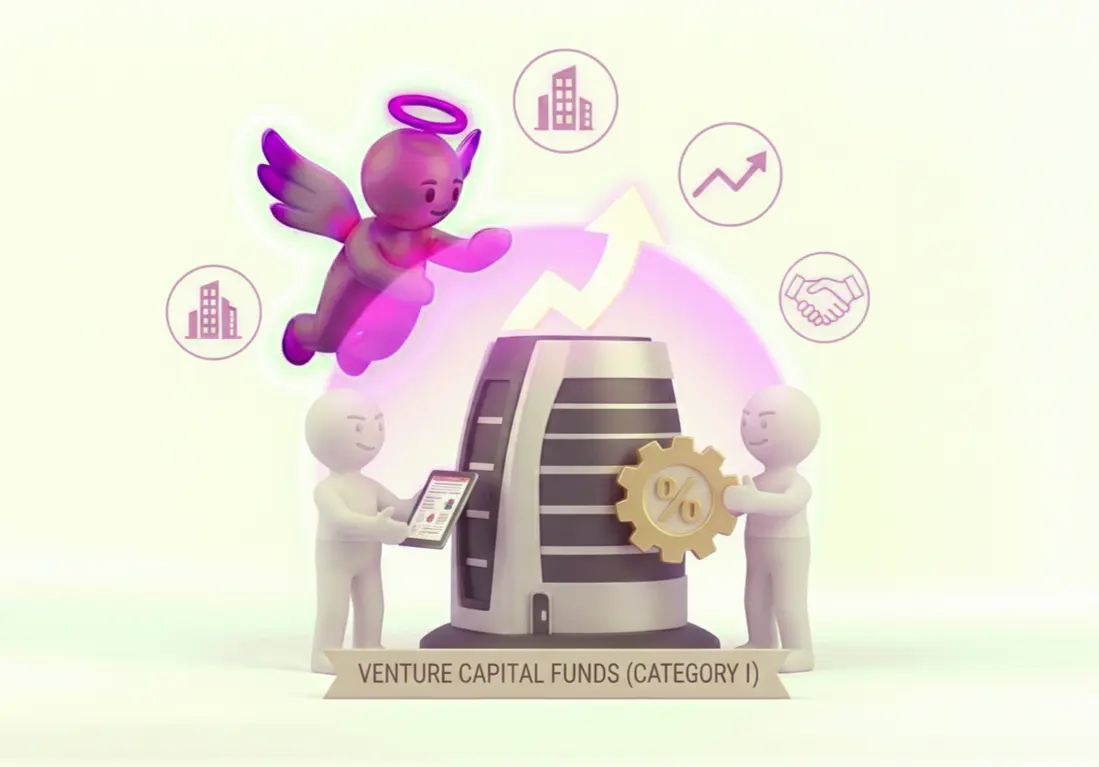
Venture Capital Funds (Category I)

Invest in early-stage startups with disruptive business models and exponential growth potential. VCFs provide capital to innovative companies before they go public—ideal for investors seeking high-risk, high-reward opportunities in India's thriving startup ecosystem.

Venture Capital Funds (Category I)
2

Angel Funds (Category I)

Back promising entrepreneurs at the seed stage alongside experienced angel investors. With a minimum investment of ₹25 Lakhs per investor, angel funds offer early entry into potentially transformative businesses with hands-on mentorship and strategic guidance.

Angel Funds (Category I)
3

Infrastructure Funds (Category I)

Participate in India's infrastructure growth story. These funds invest in companies developing roads, bridges, power plants, and urban infrastructure—offering stable, long-term returns backed by government initiatives and policy incentives.

Infrastructure Funds (Category I)
4

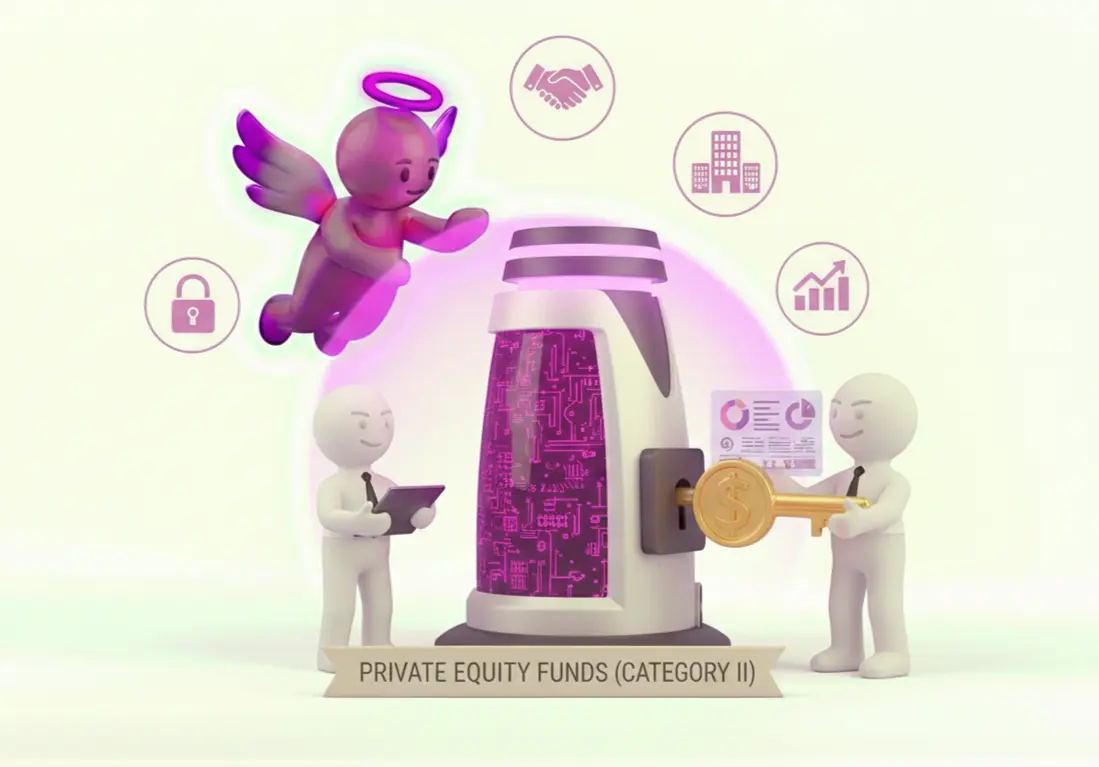
Private Equity Funds (Category II)

Invest in established unlisted companies seeking capital for expansion, restructuring, or strategic acquisitions. PE funds typically have 4-7 year horizons, offering substantial returns through active value creation in mature businesses.

Private Equity Funds (Category II)
5

Debt Funds (Category II)

Access high-yield debt instruments and structured credit opportunities in unlisted companies. These funds invest in corporate loans and bonds of growing businesses, offering attractive fixed-income returns with professional credit risk management.

Debt Funds (Category II)
6

Hedge Funds (Category III)

Sophisticated funds employing complex strategies including long-short equity, derivatives, and arbitrage across domestic and international markets. Hedge funds aim to generate absolute returns regardless of market direction—suitable for investors comfortable with aggressive strategies.

Hedge Funds (Category III)

Ready to get started?

Our experts are here to guide you through every step of your financial journey.

Schedule a Call

Frequently Asked Questions

Get answers to common questions about our services.

As per SEBI regulations, the minimum investment for Alternative Investment Funds is ₹1 Crore. For Angel Funds specifically, the minimum is ₹25 Lakhs per investor. AIFs can have a maximum of 1000 investors per scheme, ensuring exclusivity and meaningful participation.
SEBI classifies AIFs into three categories: Category I includes funds with positive spillover effects (Venture Capital, Angel, Infrastructure, Social Venture Funds). Category II covers Private Equity and Debt Funds that don't fall into other categories. Category III includes Hedge Funds and PIPE funds that employ complex trading strategies for short-term returns.
AIFs are privately pooled investments for HNIs with minimum ₹1 Crore investment, while mutual funds accept investments as low as ₹500. AIFs use complex strategies, have longer lock-in periods (typically 3+ years), and invest in alternative assets like private equity and startups. Mutual funds are more liquid, transparent, and suitable for retail investors.
Category I and II AIFs (close-ended) typically have a minimum lock-in of 3 years, with some PE funds extending to 4-7 years. Angel Funds have a 1-year lock-in. Category III funds may offer more flexibility. The lock-in ensures fund managers can execute long-term strategies without redemption pressure.
AIFs carry higher risks including: complex strategies that are harder to understand, investments in unlisted companies with limited liquidity, longer lock-in periods restricting exit options, higher fees (management + performance), and potential for significant capital loss. AIFs are suitable only for sophisticated investors with high risk tolerance.
AIF taxation depends on the category: Category I & II AIFs have pass-through status—gains are taxed in investors' hands based on the nature of income (capital gains, dividends, interest). Category III AIFs are taxed at the fund level at maximum marginal rates. Consult our tax experts for personalized advice.
Page 1 of 2

Experience the impact of expert guidance

Join thousands of intelligent investors who trust i2Finserv for their financial journey.